Rebuilding From the Inside Out: Redesigning Vistaprint's Product Model for Scale
Growth at scale requires infrastructure that can keep up with it — but infrastructure without a clear customer experience vision just produces complexity at speed. This project was about both. Vistaprint had reached a point where the existing product experience — built on a tightly coupled front-end and back-end system — was limiting how fast the business could move. Adding new products, expanding into new markets, and offering the kind of flexible, customizable shopping experience customers expected had all become harder than they should have been.
The solution was a fundamental architectural overhaul: separating the front-end experience from the back-end platform entirely, rebuilding the website with a new CMS and Product Information Master. I was brought in to design the critical layer that sits between the two — the product model and customer experience flow that would define how every product is presented and how every customer navigates the purchase process.
Information Architecture • UX Strategy • Creative Direction
Starting With the Hardest Problem First
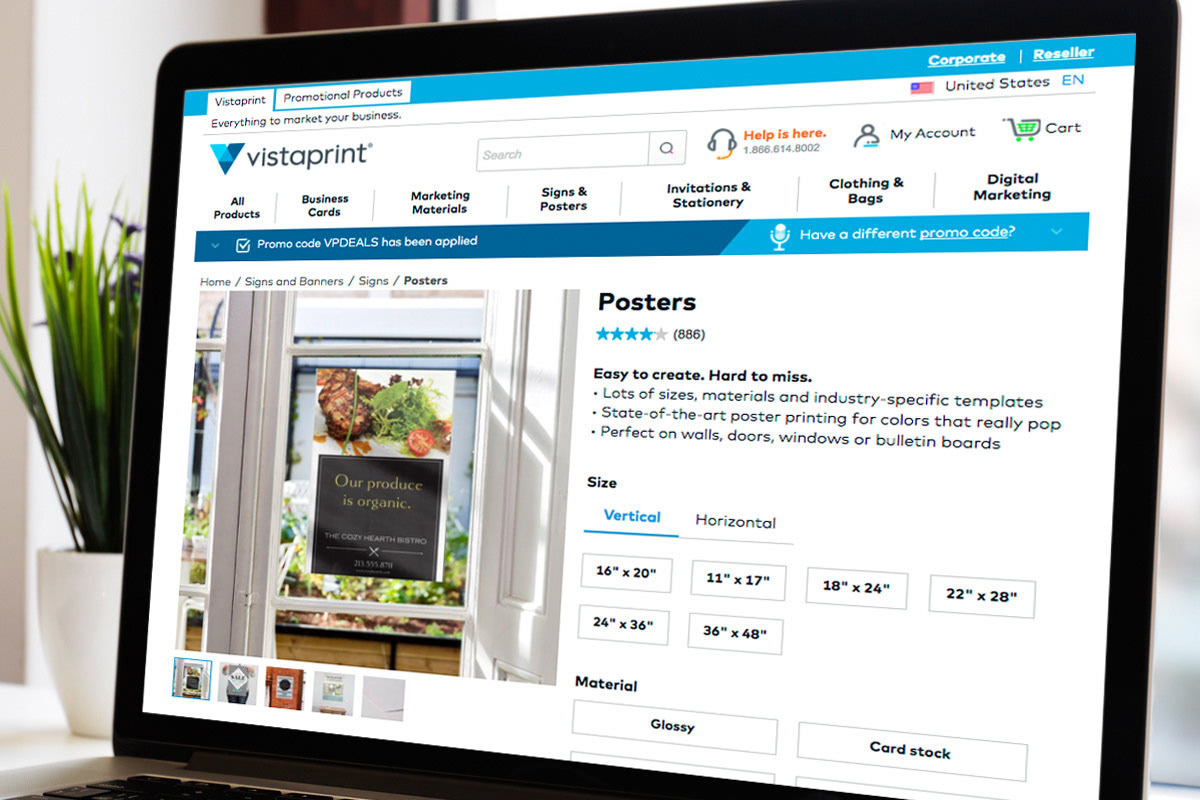
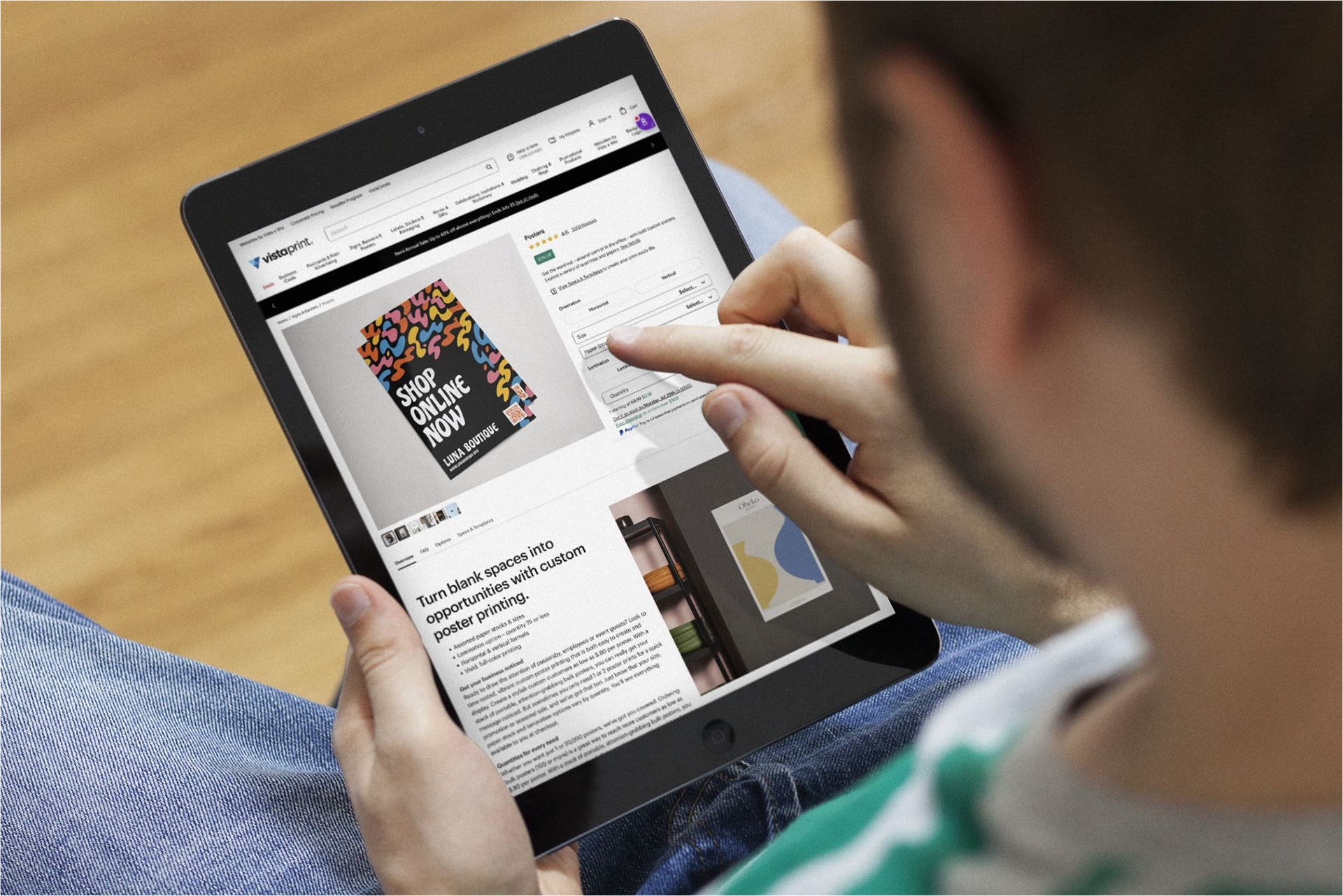
The smartest way to design a scalable, repeatable solution is to solve it against your most complex case first. For Vistaprint, that meant Signage — a product category with a level of configurability, SKU complexity, and customer decision-making nuance that made it the ideal stress test for the new model.
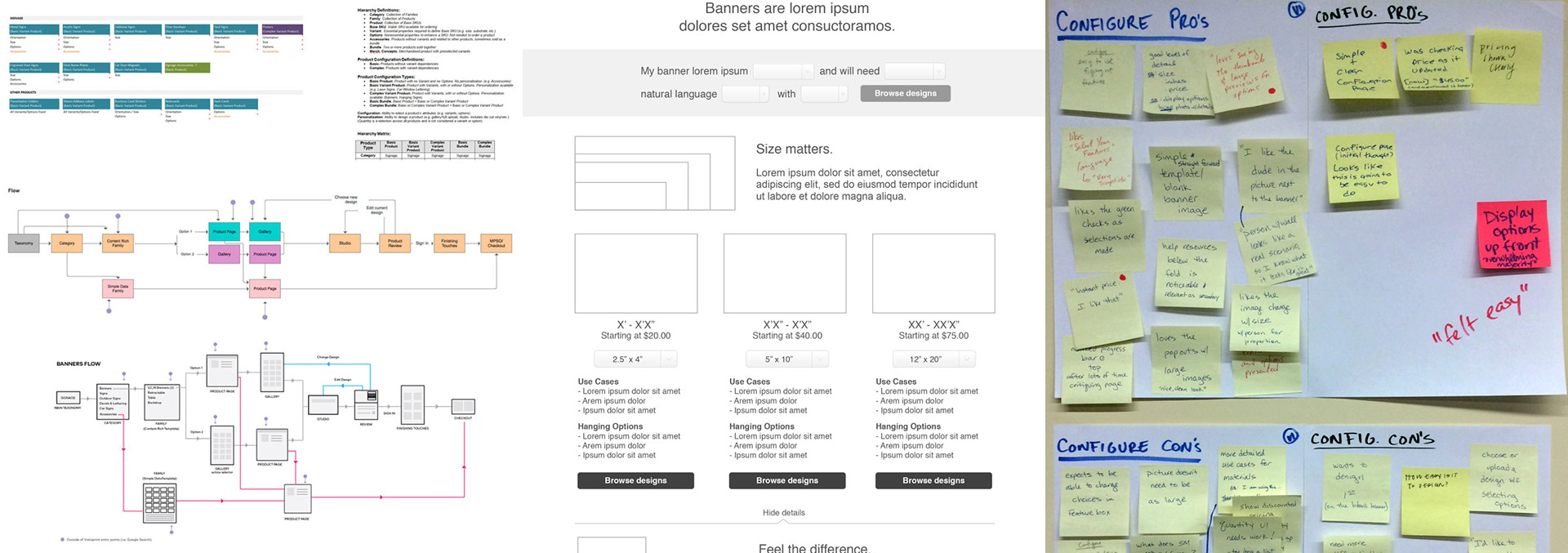
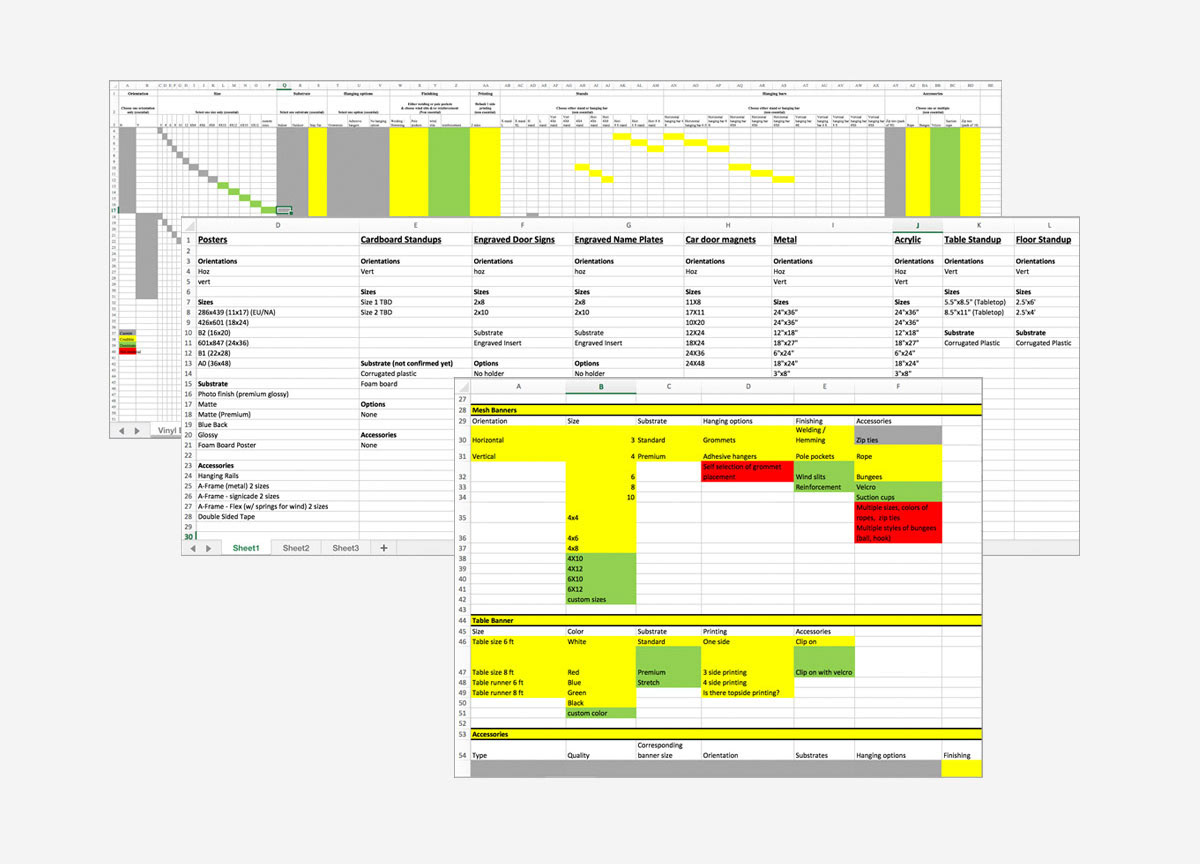
I worked through extensive product data, analyzing every attribute, configuration option, and accessory across the Signage catalog to define the full SKU framework and system architecture. The logic established here would become the template extended across every other product category on the platform. Getting Signage right meant everything else could follow.

Designing the Customer Experience Flow
With the product model framework established, the focus shifted to the customer-facing experience. How does a customer move through a product with this level of complexity without feeling overwhelmed? How do you surface the right options at the right moment without creating friction that kills conversion?
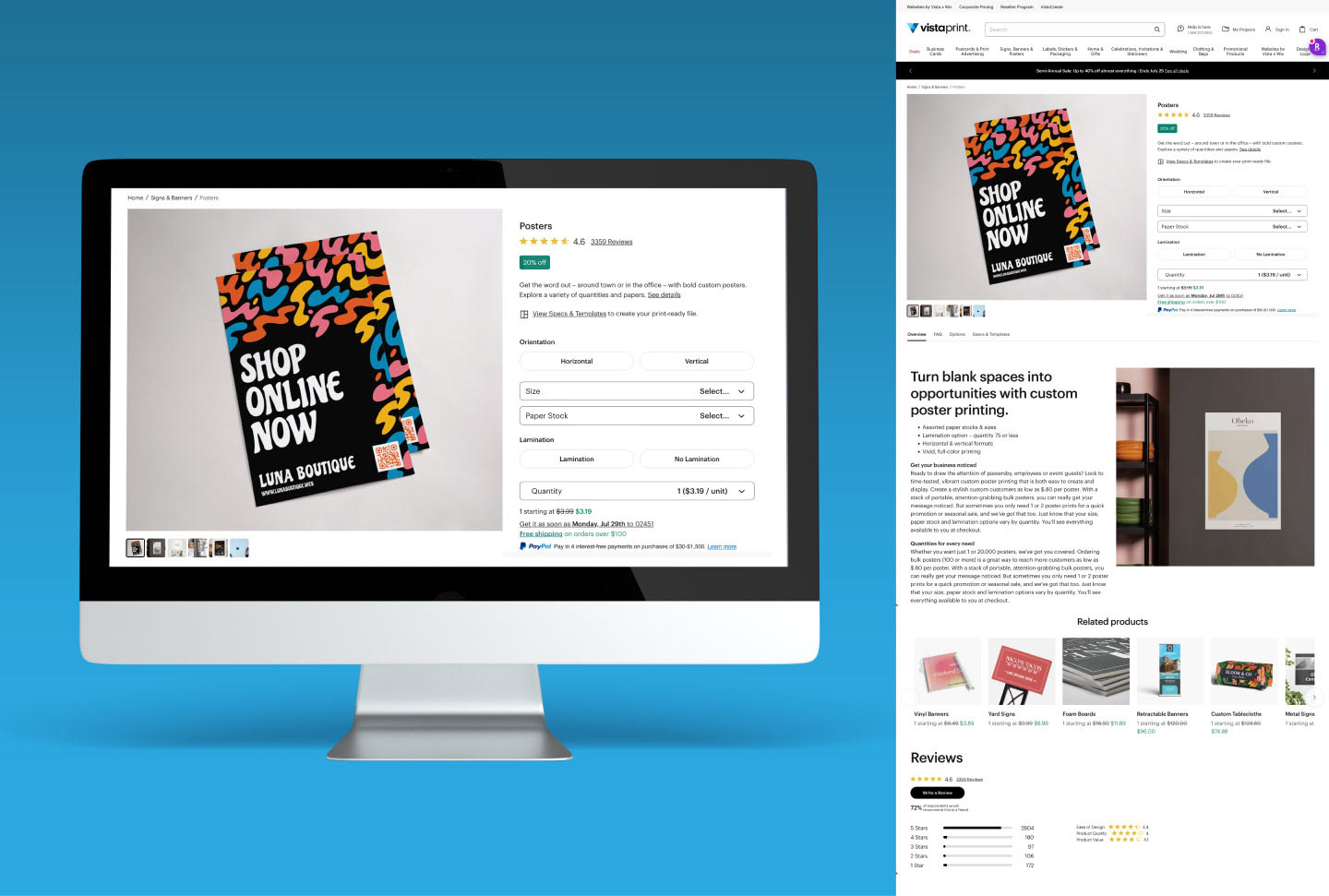
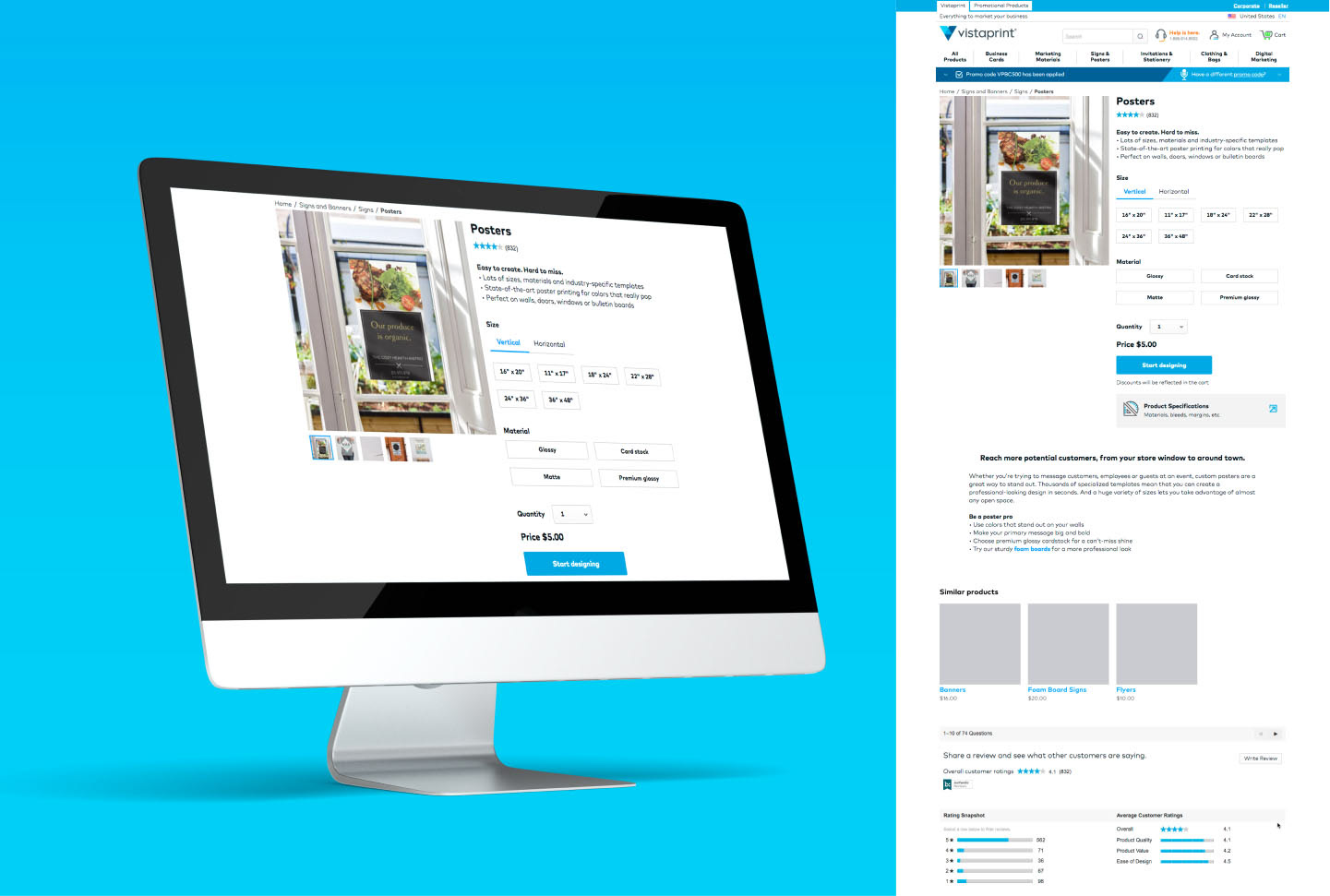
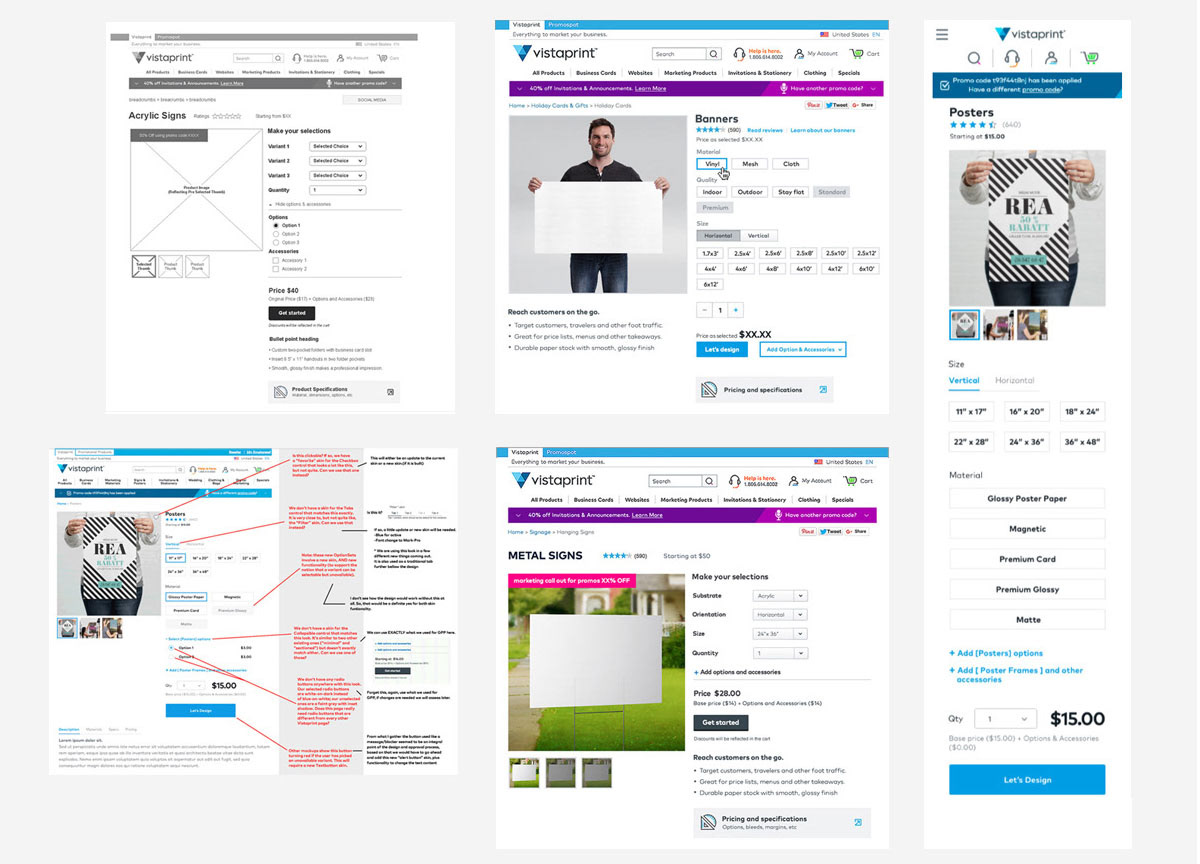
I led the design of the end-to-end customer experience flow through wireframes, prototypes, and visual mockups, running design sprints with iterative user testing at each stage to validate decisions before committing to them. Product details — attributes, configuration choices, options, and accessories — were developed and tested against three simultaneous standards: technical feasibility, merchandising logic, and customer experience quality. All three had to work together for the model to hold.
Once the design was locked, I developed comprehensive documentation to align product, technical, and marketing teams around a shared understanding of how the system worked and why it was built the way it was. That documentation became the operational foundation the broader team built from.
Testing, Scaling, and Proving It Out
The new customer experience launched into market testing with the Signage category as the proving ground. The results came back quickly and decisively. The first Market Sales Report confirmed a 1.5% conversion rate increase — translating to $950K in annual incremental bookings for the product group alone.
The response from leadership said as much as the numbers. The rollout was scaled to 100% across all locales, and the project was described internally as the boldest change to the customer experience in years. A scalable and repeatable model designed for one category had proven itself ready to power the entire platform.
What This Made Possible
A product model and customer experience framework that could scale across every category on the Vistaprint platform — giving the business the flexibility to expand its product range, enter new markets, and offer a genuinely customizable shopping experience without rebuilding from scratch each time. The $950K incremental bookings figure was the immediate proof. The scalable infrastructure behind it was the longer-term value.