How Early AI Thinking Gave Small Business Owners a Logo and a Reason to Stay
Vistaprint had a logo problem. Customers had been asking for a real DIY logo creation experience for months, and what existed at the time, an underwhelming tool and a basic upload option, wasn't cutting it. It wasn't just a customer satisfaction issue. It was a missed business opportunity. A customer who creates their logo at Vistaprint has a reason to come back. A customer who brings a logo from somewhere else does not.
This was Forge's first official business engagement, and the timing felt right. Logo creation sat at the intersection of a clear customer need and a genuine business priority, which made it exactly the kind of problem our team was built for. I led the engagement from the initial stakeholder workshop through the final end-to-end prototype, directing the research, design, and testing across five weeks of collaborative sprints.
UX Research • Product Design • Creative Direction
Project proposal video for leadership ~3mins
Setting the Stage: Introducing the Forge Process
Our first week wasn't about designing anything. It was about alignment. We brought stakeholders into the Forge process — walking them through how we work, what sprints look like in practice, how we frame problems as How Might We questions, and how we approach competitive analysis together as a team rather than in isolation.
That first week mattered more than it might sound. When stakeholders understand the process, they trust the outputs. Getting that foundation right meant every subsequent week moved faster and with more confidence behind it.
Our project hypothesis from the start: how might we deliver personalized logo creation experiences that excite and empower business owners?
Week 02: Finding the Right Starting Point
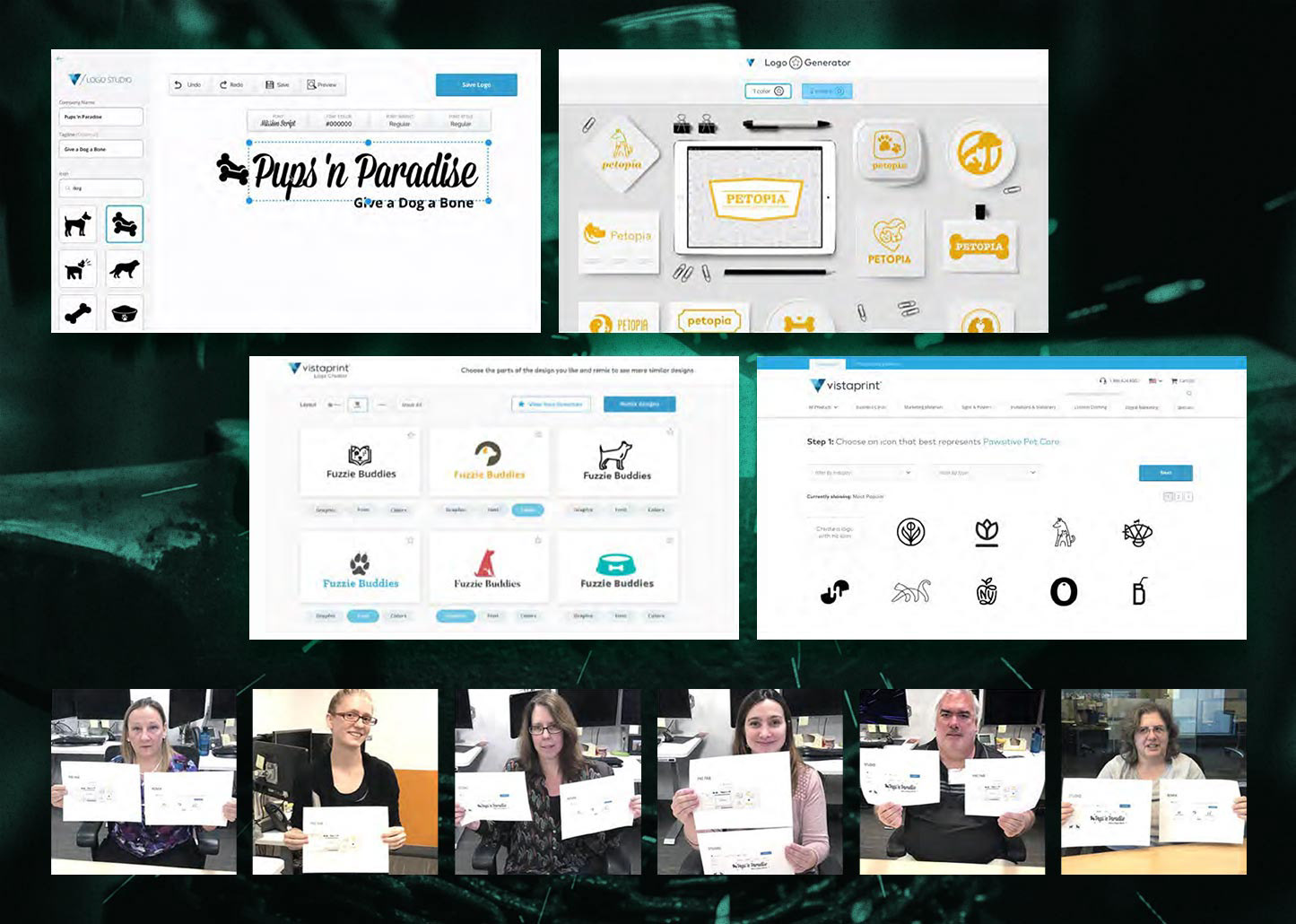
After a round of competitive audits conducted alongside the stakeholder team, we identified four distinct approaches worth prototyping: a self-serve builder, a pre-fabricated display option, a remix model allowing rapid iteration through quick selections, and a classic quiz-style experience with curated outputs to choose from.
The central question we were trying to answer: how prominent a role should logo customization play as customers shop and design — and should that role change depending on where they are in the purchase funnel?
The answer came back quickly and clearly. The combination of template-based inspiration paired with a builder for deeper customization was the unanimous favorite. Linear, step-based processes were consistent losers. Customers wanted to feel like they were exploring, not filling out a form.
Weeks 03 and 04: Shopping With a Logo
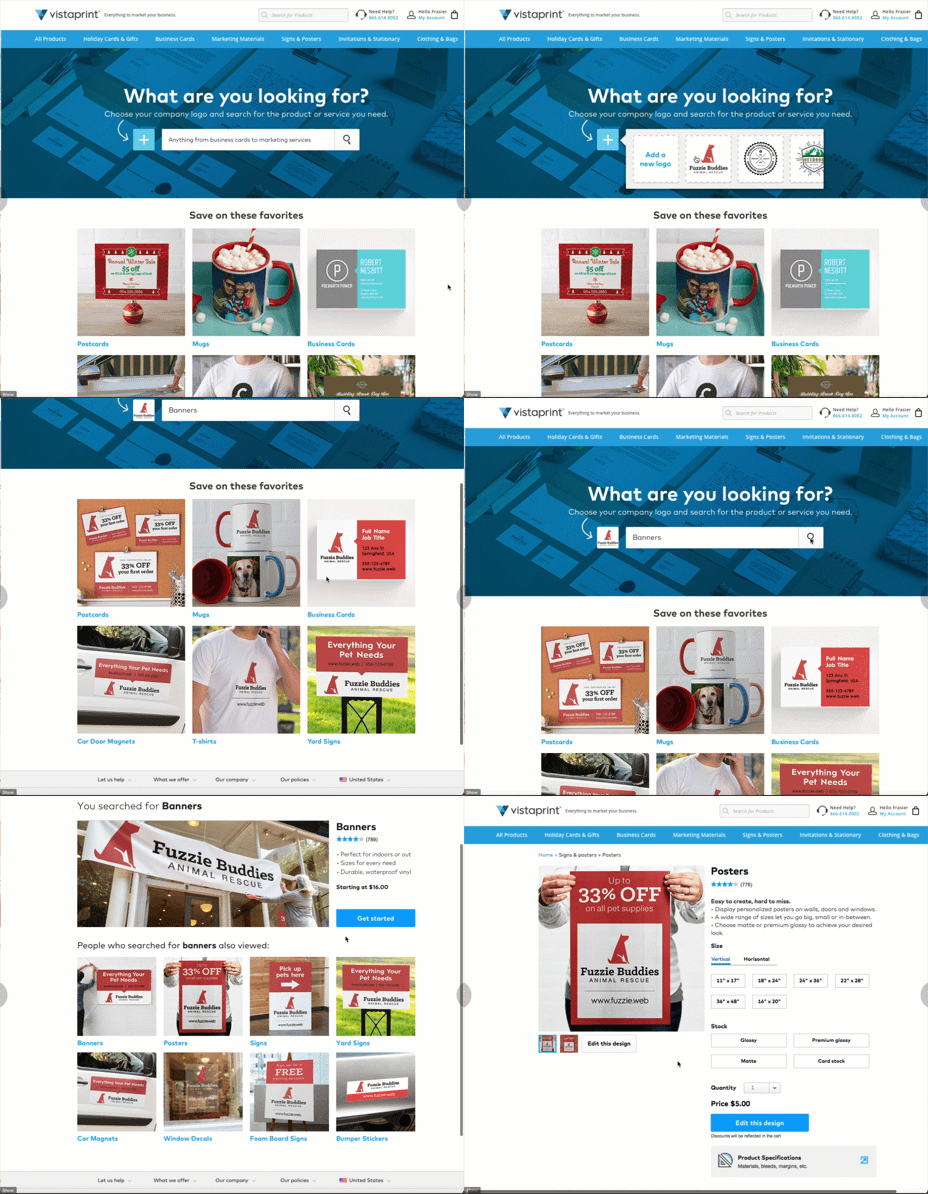
One of the most important insights of the entire engagement came out of the shopping-with-logo research, and it reframed how we thought about the whole experience. Most small business owners come to Vistaprint with a specific purpose in mind. They are not there to browse. They want to complete a task and get back to running their business.
That insight had a direct design implication: inspiration works, but only after the primary task is out of the way. Early concepts that led with logo-infused browsing fell flat. When we shifted to a prototype that completed the customer's primary task first and introduced logo-powered inspiration afterward — showing their logo come to life on relevant products — it landed immediately. Customers were more willing to explore once they felt their original goal was already handled.
That shift from inspiration-first to task-first was the turning point of the project.
Week 05: Bringing It All Together
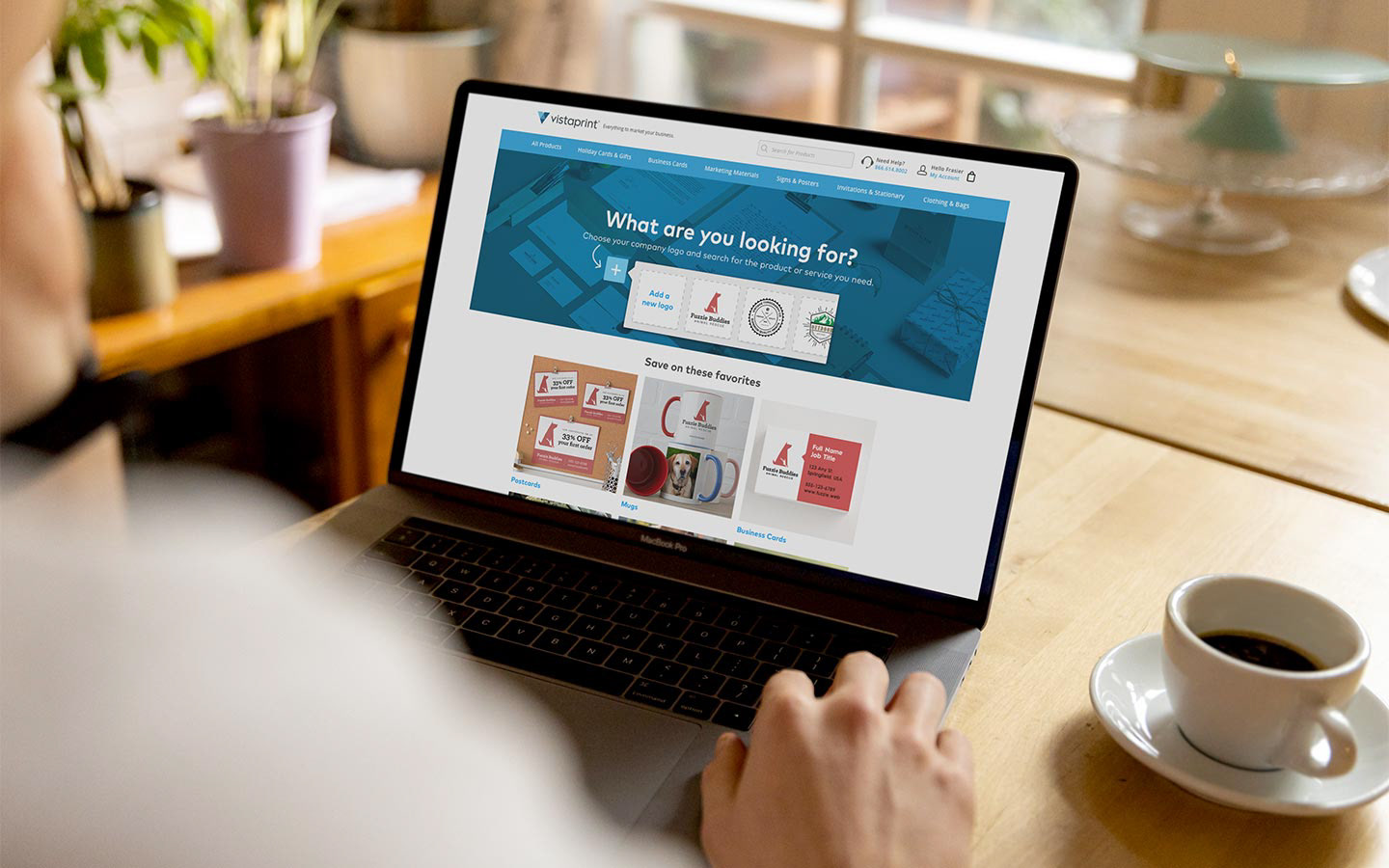
The final week was about synthesis. We took everything the research had taught us and built it into a cohesive end-to-end experience — one that showed how a small business owner could come to Vistaprint to create a logo, use it to shop, and receive a personalized design experience that curated product options matching their established look and feel.
This end state addressed two things simultaneously: what customers had been explicitly asking for, and something they hadn't fully articulated but clearly needed — a more compelling reason to stay within the Vistaprint ecosystem. A customer with a logo, a purchase, and a curated shopping experience built around their brand is a customer with a reason to come back. That's a retention story, not just a product feature, and it's what made this engagement meaningful beyond the five weeks we spent on it.
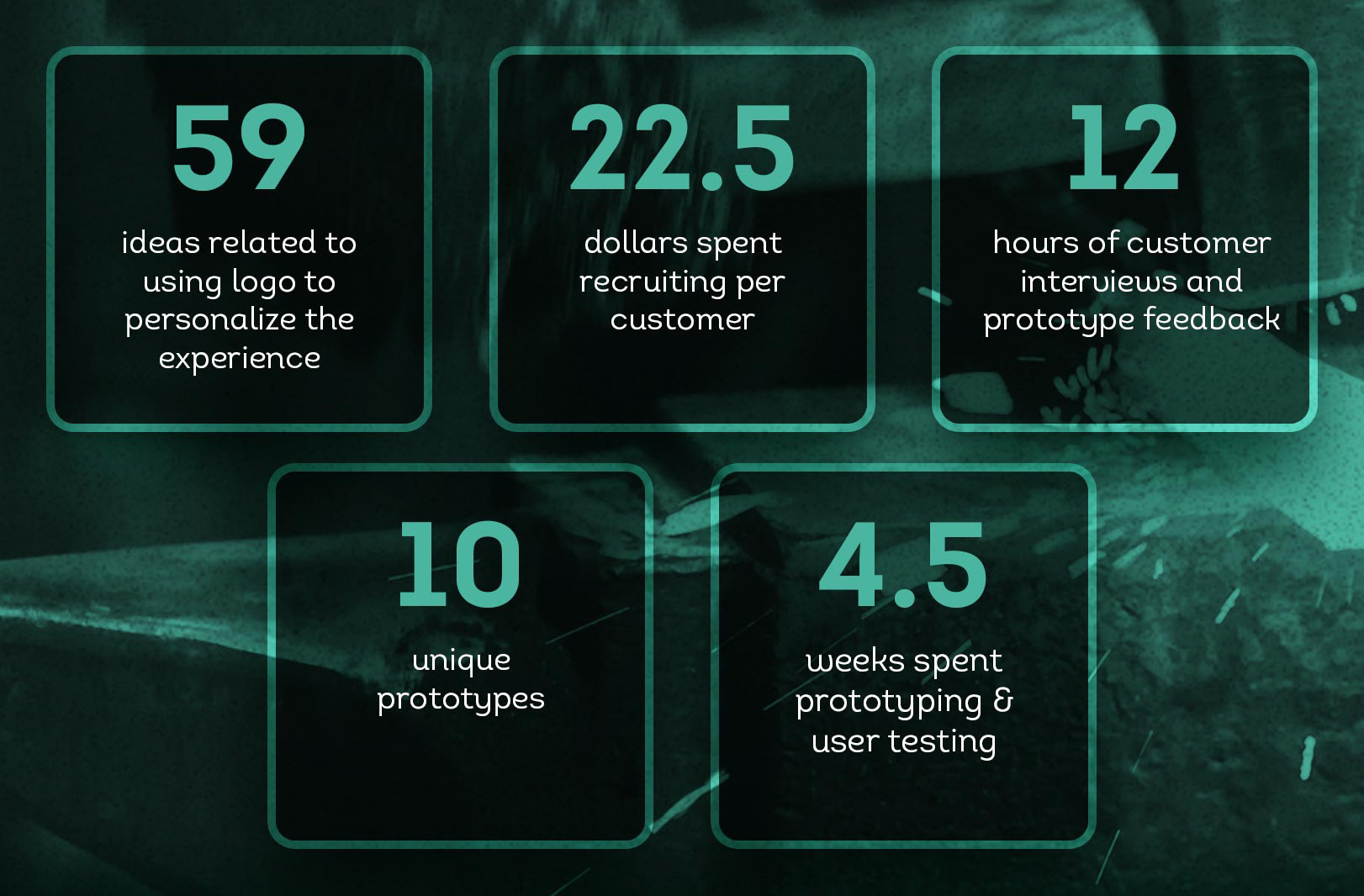
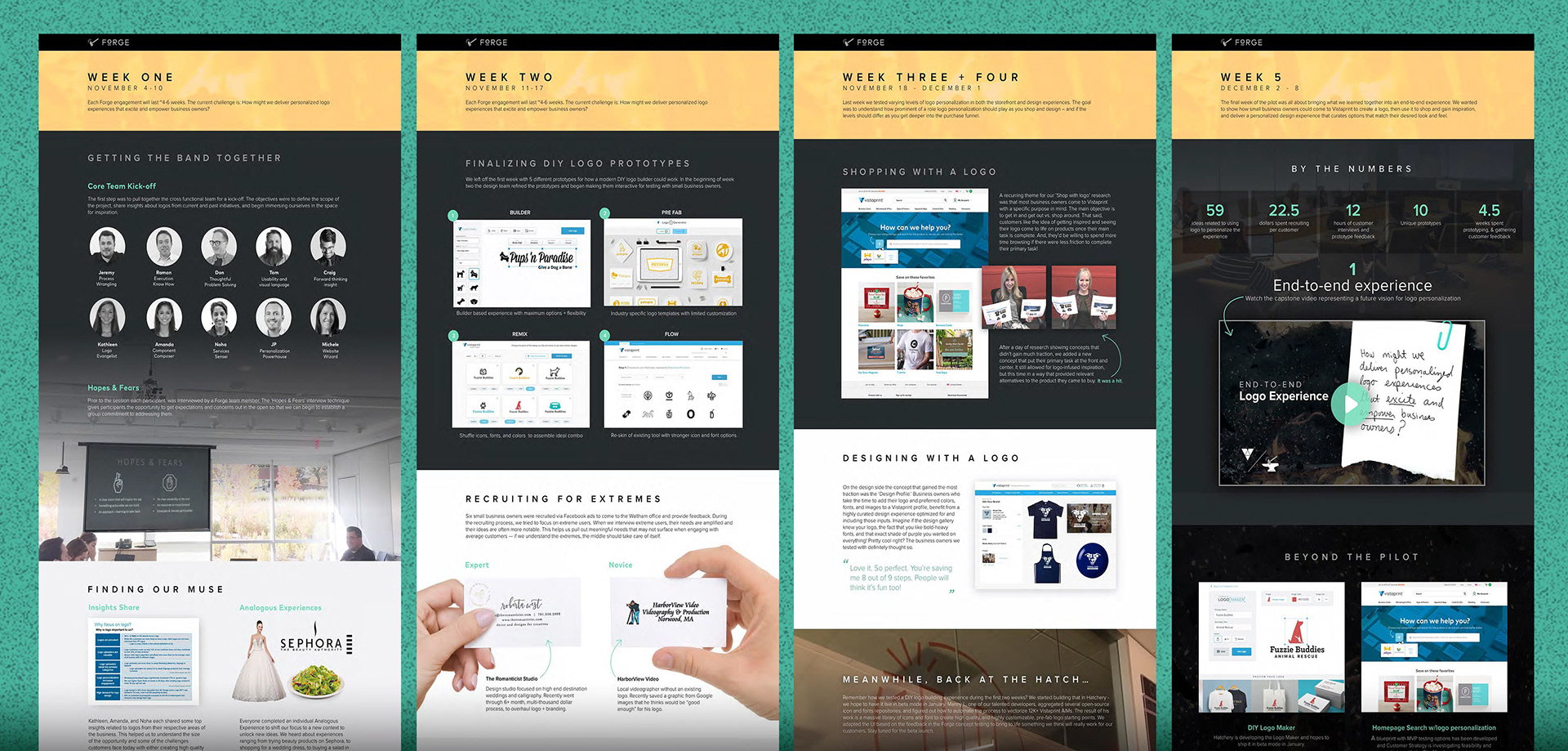
Weekly sprint recaps were shared with stakeholders and the executive team.