Designing Cheft: Building a Brand and Experience for a Platform Reborn
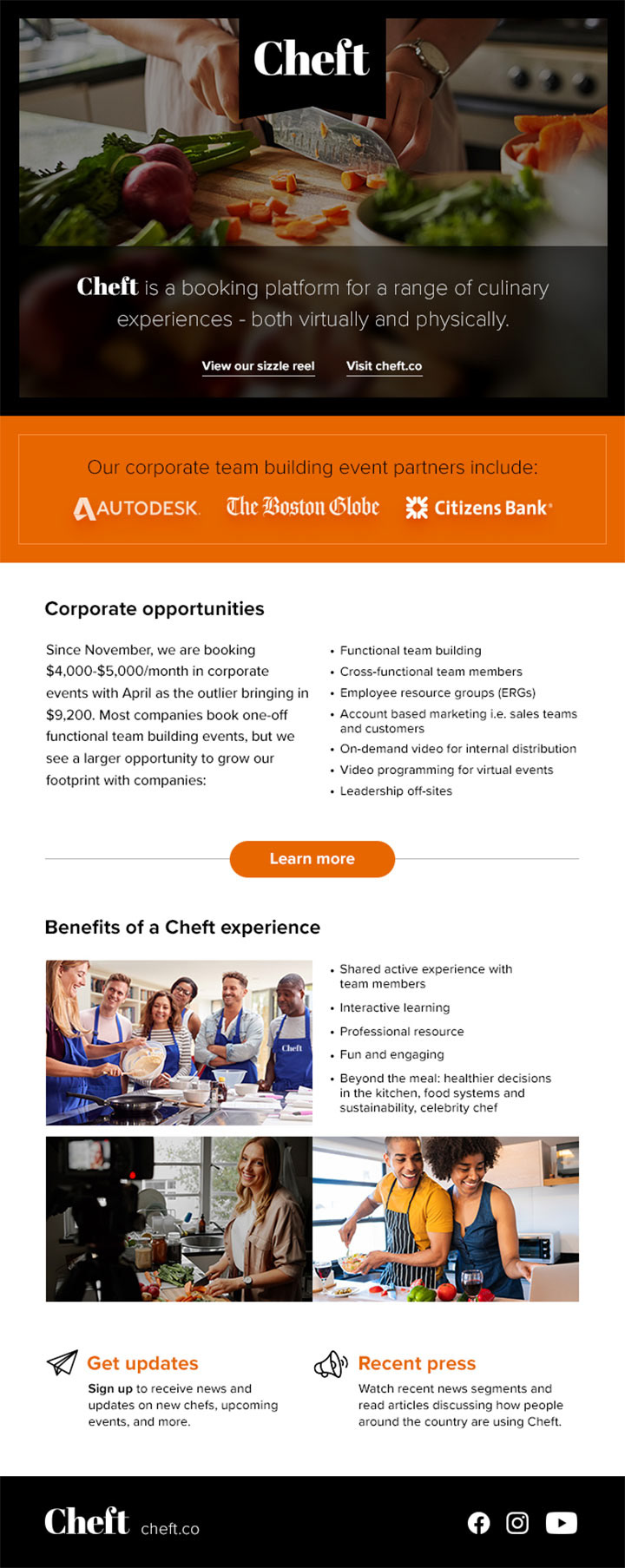
Cheft came to me at an interesting moment in its story. Originally built to connect people with professional chefs for private dining events, the pandemic forced a pivot that turned out to reveal something more meaningful — a platform with real potential to bring people together through food, virtually and at scale. Corporate team building, health and wellness programming, cultural celebration, on-demand culinary content. The business had evolved. The brand and experience hadn't caught up yet.
I was brought in as a freelance creative and UX director to close that gap — building a brand identity and digital experience that could hold the full ambition of what Cheft had become.
Brand Identity • UX Design • Web Design
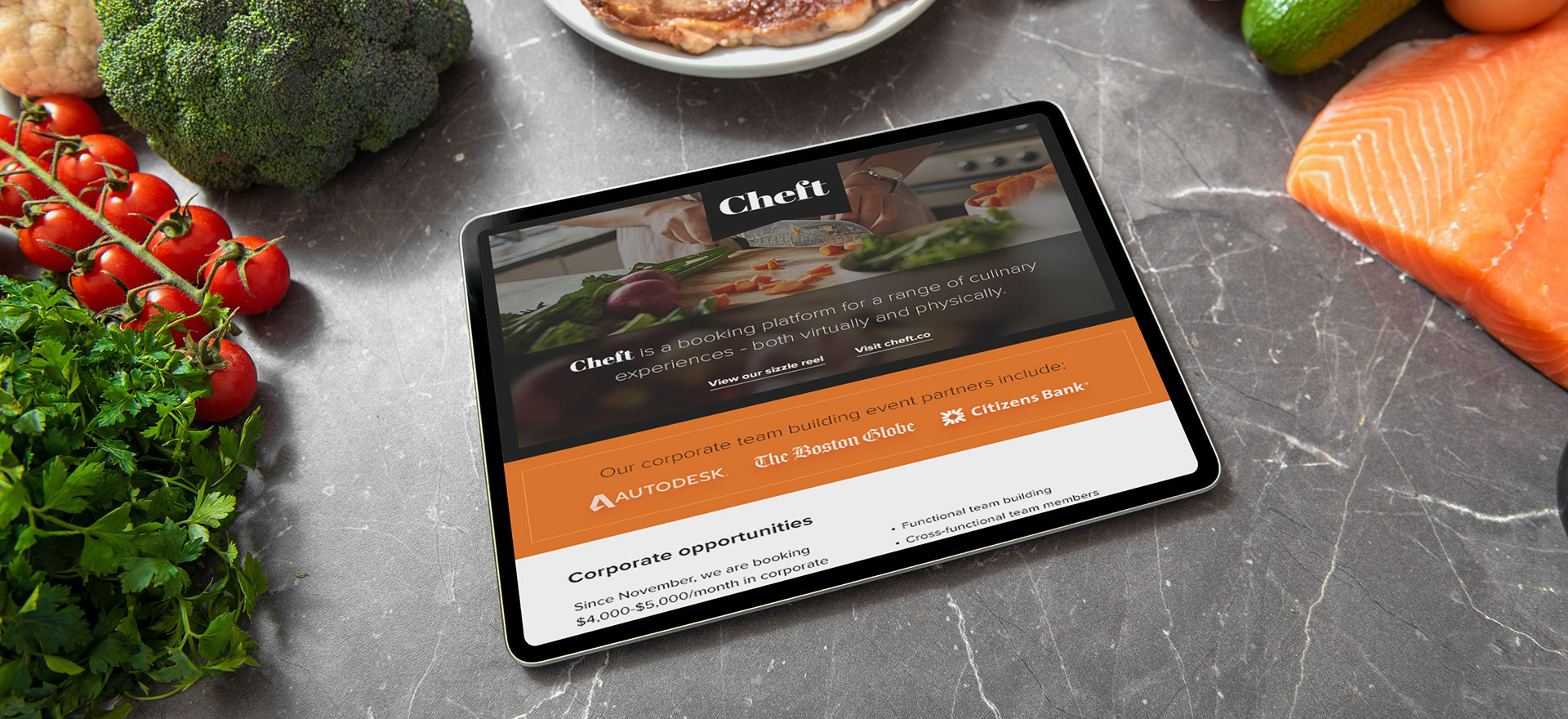
Understanding the Platform Before Designing for It
Cheft sits at an unusual intersection. It's a health and wellness platform, a marketplace, a team building tool, and a cultural celebration vehicle — sometimes all at once. The creative challenge was making something that genuinely supports healthier living feel accessible and inviting rather than prescriptive. Before any design decisions were made, I needed to understand who was using it, why they were coming, and what the experience needed to communicate to each of those audiences clearly and credibly.
The platform's strength was its network of professional chefs and the accessibility of the experiences they offered — healthier meals, diverse cuisines, live and virtual formats that could flex to fit different needs and contexts. The design challenge was presenting all of that richness without making the platform feel overwhelming or unfocused. Clarity and warmth had to coexist.
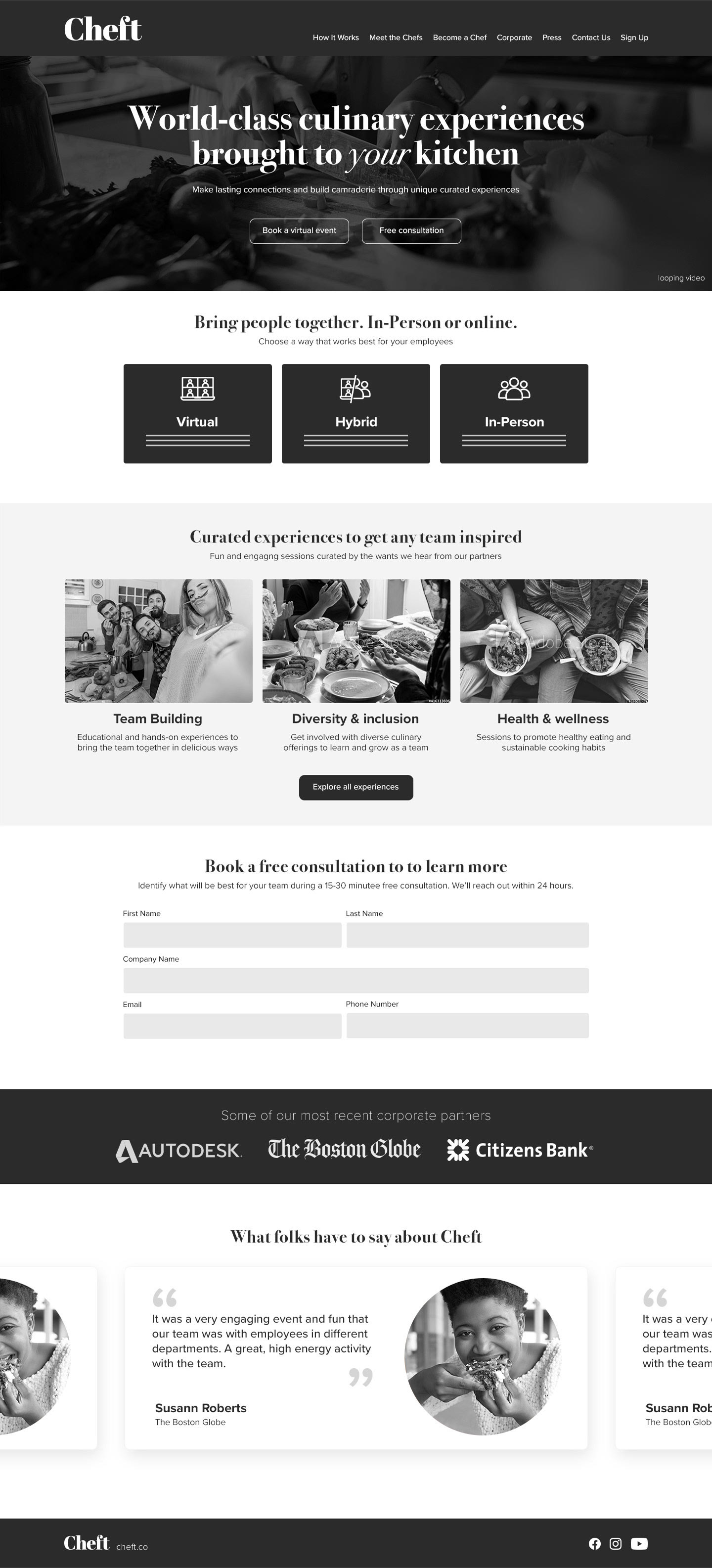
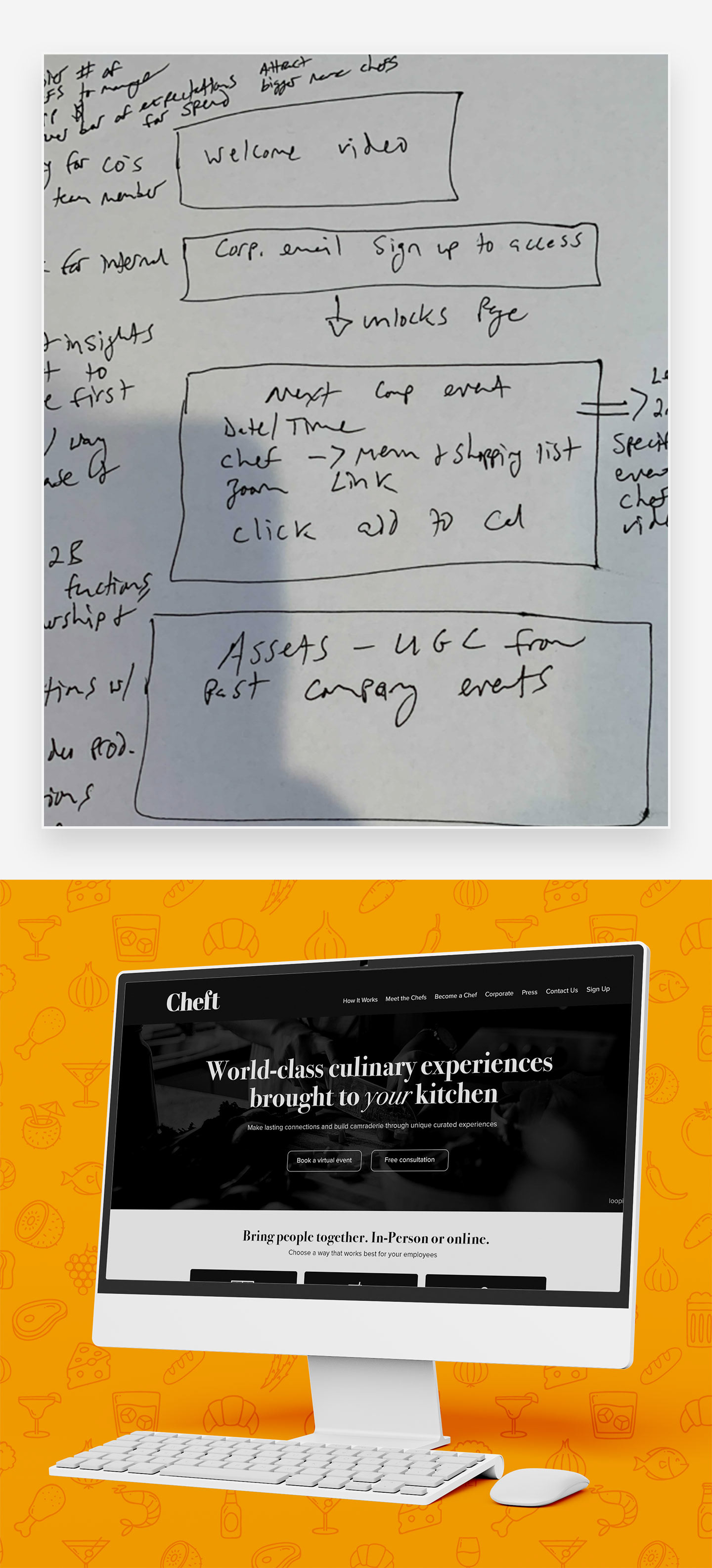
Designing the Web and UX Experience
The website and UX work centered on making Cheft's range of offerings easy to understand and easy to act on. A platform that does this many things well can easily read as a platform that does nothing clearly — so the experience design prioritized progressive clarity, guiding different types of visitors toward the offering most relevant to them without making them work for it.
I designed the core user flows to support Cheft's two primary use cases: corporate clients booking team experiences, and individuals exploring live, virtual, or on-demand content. The UX had to serve both paths without creating friction for either — a balance that required careful information architecture and deliberate hierarchy decisions throughout.
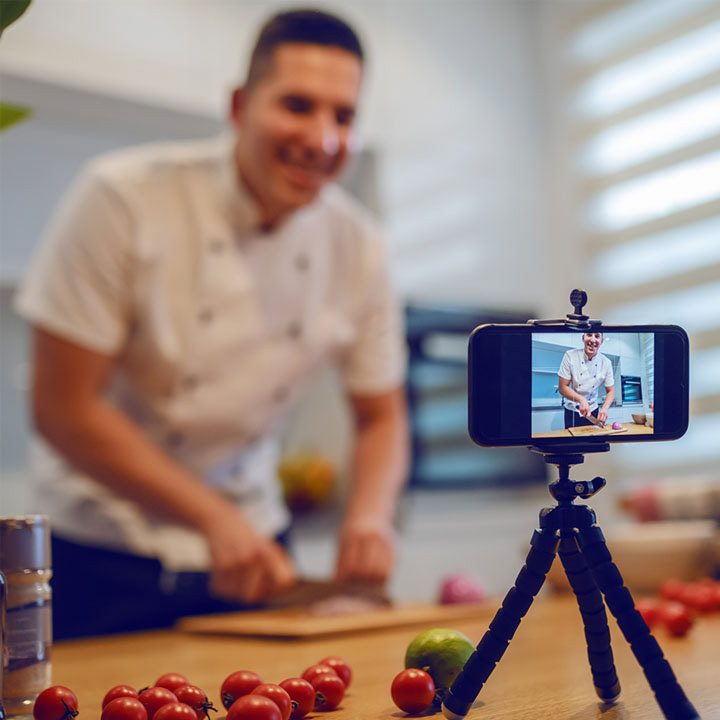

Where It Landed
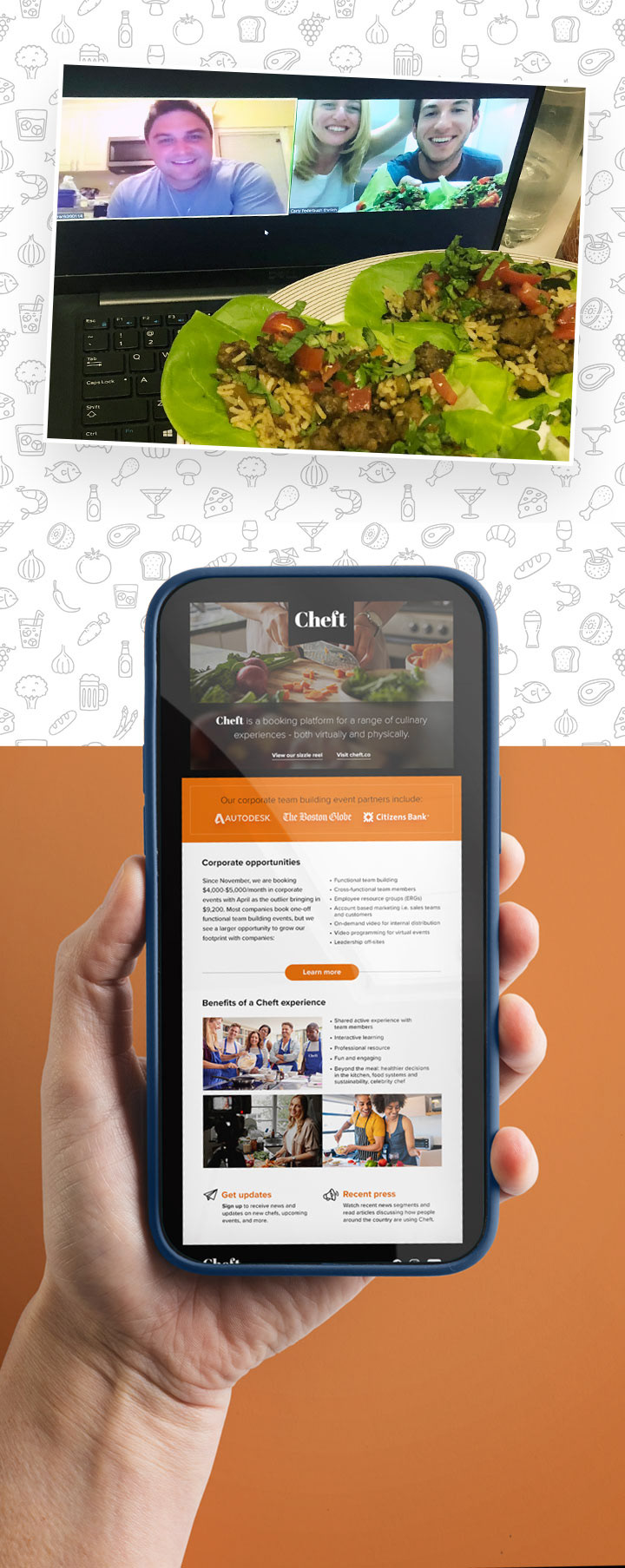
The work gave Cheft a cohesive visual identity and a digital experience that matched the ambition of what the platform had grown into. The brand system brought consistency and warmth to a product that had previously lacked both, and the UX gave different audiences a clearer path to the experience that was right for them. For an early-stage platform still finding its footing post-pivot, that foundation matters — it's what makes growth feel possible rather than chaotic.